Insights & Expertise

Thoughts on European market entry, pricing strategy, and AI-driven growth

From Shenzhen to Paris

From Shenzhen to Paris: Why Culture, Not Price, Decides Asian Tech Success in Europe

Keywords: Asian brands Europe, European market entry strategy, cultural differences in business, tech distribution Europe

For JAIO, we see the same pattern again and again: highly competitive Asian brands arrive in Europe with strong products and sharp pricing and still struggle to scale. The real barrier is not performance or cost. It is culture-market fit: the ability to translate an Asian way of designing, deciding, and selling into a European environment that is fragmented, regulation-heavy, and brutally driven by trust.

Europe Isn't "One Market" Especially in IT Hardware

From a distance, "Europe" looks like a single growth region on a strategy slide. In reality, it is a patchwork of go-to-market logics, retail structures, and channel expectations.

Consumer protection and after-sales expectations are not optional add-ons; they shape how distributors, resellers, and end-users evaluate a brand. A PSU, chassis, monitor, or peripheral may be technically perfect, but if pricing structures, RMA workflows, or documentation don't match local norms, the product will underperform.

At JAIO, we treat "Europe" as a portfolio of micro-markets. The same Asian brand can be seen as a smart challenger in Germany, too risky in France, and invisible in the Benelux with the same catalogue.

High-Context vs Low-Context: The Invisible Mismatch

Many Asian organisations operate in a high-context mode: decisions and messages rely on relationships, shared history, and implicit understanding. European buyers both B2B and B2C expect low-context communication: explicit terms, written commitments, and formalised processes.

In practice, that means a "good relationship" with a distributor is not enough if discount policies, MDF rules, or warranty terms are not written, clear, and stable. What feels "flexible and adaptive" from the brand side can be perceived as "unpredictable and risky" by European partners.

When Culture Turns Into Channel Friction

Cultural gaps don't stay abstract; they show up in very operational ways in IT and gaming hardware:

  • Rules vs exceptions: Some Asian teams are comfortable building business on exceptions and one-off deals. European distributors push for transparent, documented conditions.
  • Hierarchy vs local autonomy: A highly hierarchical HQ can slow down local decision-making on pricing, promo participation, and special bundles.
  • Short-term wins vs long-term positioning: Aggressive price drops without a clear brand narrative may drive short spikes in sell-in, but they destroy brand equity.

The European "Trust Stack" for Tech Brands

For a new Asian hardware brand, trust in Europe is built less on marketing claims and more on what we at JAIO call the European trust stack:

  • Clarity as a feature: Product ranges, naming, spec sheets, and positioning must be intelligible in seconds.
  • After-sales as a growth lever: Warranty duration, RMA speed, DOA handling are core parts of brand perception.
  • Compliance as a signal of seriousness: Local language documentation, safety labels, eco-contributions signal commitment to Europe.

How JAIO Helps Asian Brands Translate Culture Into Growth

JAIO operates at the intersection of market intelligence, channel strategy, and cultural translation. For Asian tech and hardware companies entering or scaling in Europe, that means three concrete areas of support:

  • From "global strategy" to local playbook: We adapt global positioning, product mix, and price architecture to specific European markets.
  • Channel-ready frameworks: We define clear discount structures, incentive models, and after-sales workflows that European partners can trust.
  • Feedback loops that HQ can act on: We translate market feedback into concrete, data-driven adjustments.

For Asian companies, Europe is a complex but highly attractive arena. Those who win are rarely the ones with the lowest price alone, but those who take culture as seriously as performance and who build the right bridge between their way of working and European expectations.

💡 Related services: Learn more about our European market entry services, distribution network, and market entry packages.

About the author: Jonathan Filleau is the Founder & Managing Partner at JAIO, with 20 years of experience bridging Asian tech brands and European markets. Former VP Europe at Corsair (NASDAQ), he specializes in helping hardware companies navigate the cultural and commercial complexities of European expansion.
AI-Driven Pricing Strategy

AI-Driven Pricing: The Untapped Advantage Most Companies Are Missing

Keywords: pricing strategy AI, european pricing strategy, dynamic pricing tools, retail pricing optimization

Excel open. Headphones on. And that feeling of recalculating the same thing for the tenth time. 🧩

I've spent recent years driving pricing strategies in international environments, working with teams recognized for their mastery of business gaming, marketing, margins, and P&L logic. We had the right files, the right processes, the right reflexes… But it was only by exploring machine learning that real solutions began to emerge.

While preparing my course on AI-Driven Marketing Strategy for Master's students at KEDGE Business School, I couldn't help but think back to old challenges: Manual models, validation cycles still too heavy, and little real-time visibility.

In my opinion, pricing remains one of the most underexploited areas for AI in many companies.

And yet, certain machine learning-based pricing tools have genuinely impressed me with their predictive power.

These AI tools are real game-changers:

  • Data fully connected to ERP, CRM, and P&L
  • Dynamic pricing by channel (retail, e-tail…), product lifecycle, BER, or promo strategy
  • Margin impact simulation before production deployment
  • A/B price or promo scenarios tested and forecasted in real-time
  • Automatic price updates no more Sunday night emergencies

What does this change?

We're no longer just reacting. We simulate. We anticipate. And we make better decisions, faster and at lower cost.

If you're exploring these topics, looking for solution recommendations, or simply want to exchange ideas, I'm always up for a conversation.

About the author: Jonathan Filleau is the Founder & Managing Partner at JAIO, with 20 years of experience in international P&L leadership, pricing strategy, and AI-driven transformation. Former VP Europe at Corsair (NASDAQ), he now helps tech brands successfully enter and dominate European markets.

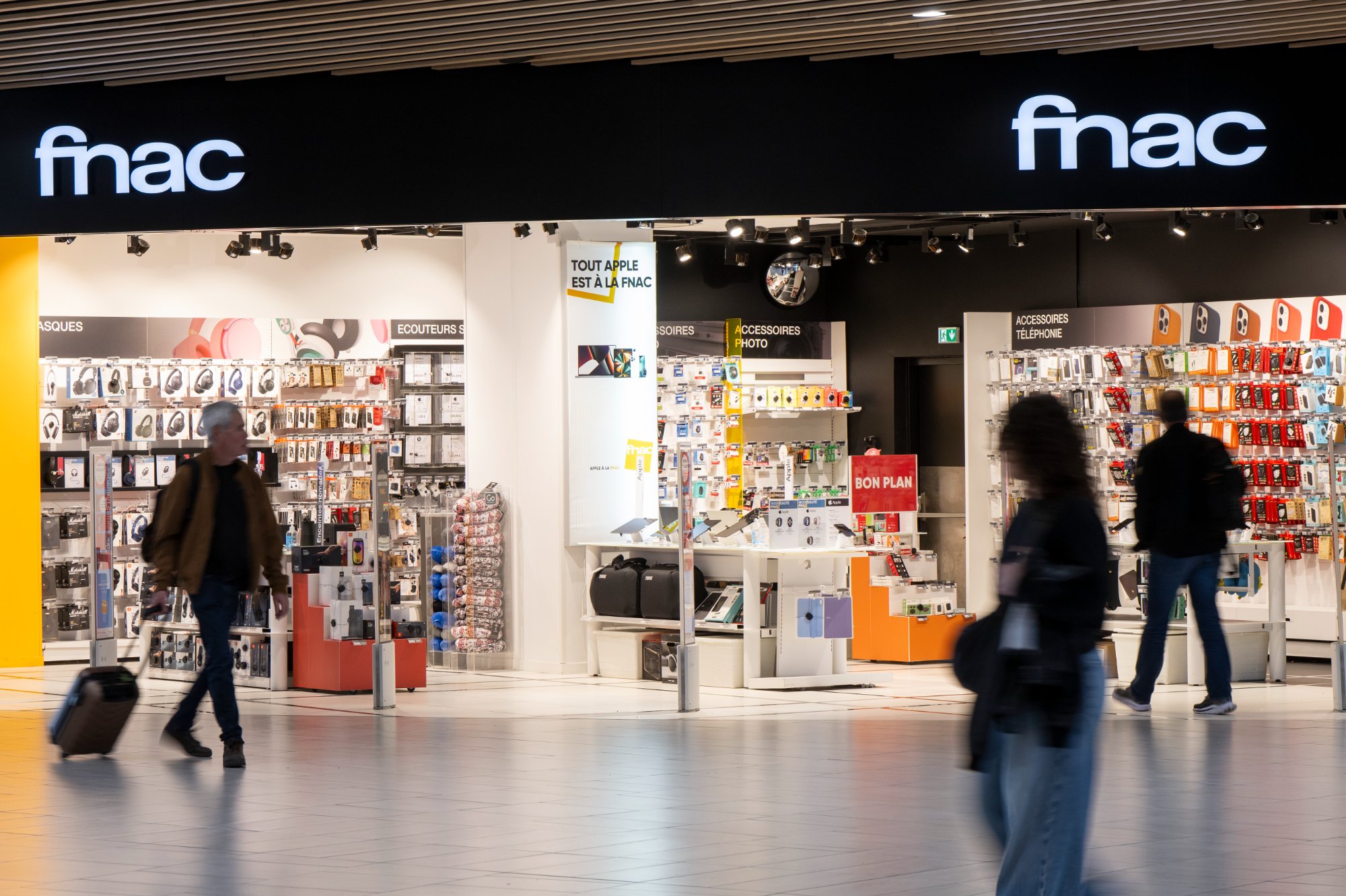
Fnac store - how foreign tech brands get into European retail

How to Get Your Products into MediaMarkt, Fnac and Currys as a Foreign Brand

Every year, hundreds of foreign tech brands arrive in Europe with strong products, competitive pricing, and a clear ambition: to be on the shelves of MediaMarkt, Fnac, or Currys. Most never get there. Not because their products are not good enough. Because they do not understand how European retail actually works.

Here is what the buying teams at Europe's biggest tech retailers see every week: a deck, a price list, a reference to impressive sales figures in Asia, and a request for a meeting. Here is what they almost never see: a credible European go-to-market plan, local pricing architecture, a clear RMA and after-sales structure, and evidence that the brand understands how their country works.

European retail is not one market

MediaMarkt operates differently in Germany than in Spain. Fnac in France has a completely different buying culture than Currys in the UK. El Corte Inglés in Spain is structured around long-term supplier relationships. Coolblue in the Netherlands is obsessed with service and brand story. Getting into one does not mean you can replicate the approach across borders.

The brands that succeed treat each country as a separate project. They localize their pricing, their packaging language, their warranty terms, and their marketing claims. They show up knowing who the category buyer is, what margin structure works for that retailer, and what their main competitors are doing on that shelf.

What retail buyers actually look for

Buyers at Fnac, MediaMarkt, and Currys are evaluating three things simultaneously: how much money they will make on your product, how much work it will create for their team, and whether your brand will still be there in 18 months. Your pitch has to answer all three without them having to ask.

That means arriving with a clear SRP that works for their market, a back-end rebate program that protects their margins, a promotional calendar for the first 12 months, and a named contact for day-to-day operations and RMA management. It means knowing the difference between sell-in and sell-out, and being able to talk about both.

The distribution step most brands skip

The fastest route into European retail is rarely direct. Most foreign brands that successfully land in Fnac or MediaMarkt in their first year do it through a distributor with an existing relationship with that retailer. The distributor absorbs the financial and operational risk for the retailer. They provide local warehousing, local invoicing, local language support. For a buying team already managing 300 suppliers, adding a direct relationship with an unknown foreign brand is a real cost. A distributor relationship removes that friction entirely.

This is exactly how JAIO operates. We build the bridge between your brand and the right distributor for your product category, in the right markets, with the right commercial terms. And we stay involved through the first sell-through cycle to make sure the relationship delivers.

Timeline: what to realistically expect

From first contact to product on shelf, the realistic timeline for entering a major European retailer as an unknown foreign brand is 6 to 12 months. Faster if you have a distributor already holding the retailer relationship. Slower if you are starting from scratch on compliance documentation, local pricing, and marketing material. The brands that compress this timeline are the ones that arrive prepared: CE marking done, packaging in local language, pricing ready, and a distribution partner already identified.

If you are planning a European retail entry, the single most important investment you can make is in preparation before the first buyer meeting. Not during. Not after. Before.

JAIO helps foreign tech brands get into Fnac, MediaMarkt, Currys, Coolblue and 50+ retail partners across 10+ European countries. Talk to us about your European retail strategy.

The journey from Asia to Europe - why foreign tech brands fail and how to succeed

Why 80% of Foreign Tech Brands Fail in Europe, And How to Be in the 20%

In 20 years working in European tech distribution, first as VP Europe for a NASDAQ-listed hardware brand and now running JAIO, I have seen the same failure pattern repeat itself dozens of times. A brand with a genuinely good product, serious ambition, and real investment behind them enters Europe and spends 18 months going nowhere. Then they either pull out, or they start over with a completely different approach. The second approach usually works. The tragedy is that most of what they needed to know was knowable before they started.

Here are the five reasons most foreign tech brands fail in Europe, and what the ones that succeed do differently.

1. They treat Europe as one market

Europe is not a market. It is 27 regulatory frameworks, 24 official languages, and a patchwork of retail structures that have almost nothing in common with each other. A pricing strategy that works in Germany will destroy your margins in France. A distribution model that fits the UK will not translate to Spain. The brands that win start with one or two countries, go deep, prove the model, then expand. The brands that fail try to be everywhere at once, spread their resources too thin, and build nothing properly.

2. They underestimate compliance as a commercial signal

CE marking, RoHS, WEEE, packaging language requirements, GDPR, foreign brands often treat these as administrative boxes to tick after the commercial strategy is set. European distributors and retailers see it differently. A brand that arrives with full compliance documentation signals that it is serious, that it understands the market, and that it will not create legal problems for its partners. A brand that arrives without it signals the opposite, regardless of how good the product is.

The best brands use compliance as a competitive advantage. They lead with it in buyer conversations. They make it part of the brand story: we built this for Europe, not just for export to Europe.

3. Their pricing architecture is wrong for European channels

Asian brand pricing is typically built around high volume and thin margins at each level of the chain. European retail does not work that way. Distributors need 20 to 30 percent. Retailers need 35 to 50 percent. Marketing development funds, back-end rebates, return provisions, and demo unit budgets all come on top. A brand that arrives with a consumer price point that leaves no room for this structure will not find a distributor willing to take it on. The math has to work for every party in the chain before anyone signs anything.

4. They do not invest in local brand building

Europe is a trust economy. Consumers do not buy tech brands they have never heard of. Retailers do not list tech brands that consumers have never heard of. The brands that break through invest in building local awareness before they need it: trade press, influencer seeding, trade show presence, Amazon brand store, multilingual A+ content. This is not a luxury. It is the engine that makes the retail relationship sustainable past the first sell-in cycle.

5. They do not have a local partner with real relationships

The final and most common failure point is trying to do it alone. Sending a sales manager who does not speak the language to cold-call European buyers is not a market entry strategy. European retail is a relationship market. The category buyers at Fnac, MediaMarkt, and Currys have worked with the same distributors for 10 to 15 years. Getting in front of them requires either a warm introduction from a trusted intermediary, or a significant investment of time that most brands do not have.

The 20% that succeed nearly always have a local partner who understands the channel, has existing relationships with the buyers, and can translate both the commercial opportunity and the brand story into language that European buyers respond to.

What the 20% do differently

They start narrow, go deep, and prove the model before expanding. They arrive fully compliant and present compliance as a feature. They build pricing architecture that works for every level of the distribution chain. They invest in local brand building before they need retail listings. And they find a partner who already knows the buyers they need to reach.

None of this is complicated. All of it requires preparation, patience, and the right local expertise. That is exactly what JAIO provides.

JAIO has helped foreign tech brands across 10+ European countries, with relationships at Fnac, MediaMarkt, Currys, Coolblue, Amazon EU and 50+ more retail partners. Let us help you be in the 20%.

European tech retail shelves - foreign brands winning shelf space in MediaMarkt Fnac Currys

Why Korean Brands Are Winning in European Retail Right Now, And What Every Foreign Brand Can Learn From Them

Something has shifted in European retail over the past 18 months. Walk into Sephora in Paris, Boots in London, or Douglas in Germany and you will find Korean brands that were virtually absent two years ago now occupying prime shelf positions. COSRX, Laneige, Beauty of Joseon, Gentle Monster. Not in specialist Asian stores, in the mainstream. In the same chains that spend months evaluating new suppliers and years building listing relationships.

At the same time, many Chinese brands with equally strong products, competitive pricing, and genuine European ambitions are still struggling to get a foothold. The same retailers. The same category buyers. Very different outcomes.

This is not a coincidence. And it is not about K-pop. The reasons are operational, regulatory, and commercial, and every foreign brand trying to enter European retail should understand them.

Compliance as a competitive advantage, not a checkbox

The single biggest factor behind Korean brands' success in European retail right now is not cultural momentum. It is compliance culture.

Korean brands, particularly in beauty, electronics, and consumer goods, have built systematic compliance processes into their product development. When the EU updated its cosmetic ingredient regulations in 2025, Korean beauty brands reformulated and relabeled faster than most of their Western competitors. When CE marking requirements tightened on electronics, Korean manufacturers had the documentation ready. When GDPR requirements applied to connected devices, Korean tech brands had already built privacy frameworks into their firmware.

This matters enormously in a European retail context. A buying team at Sephora or MediaMarkt is not just evaluating your product. They are evaluating their own risk exposure. A brand that arrives with complete, accurate, multilingual compliance documentation is not just easier to list, it signals seriousness, stability, and the operational maturity that retailers need before they commit shelf space to an unknown foreign brand.

Many Chinese brands, by contrast, are still treating compliance as the final step before market entry. It needs to be the first.

The regulatory headwind hitting Chinese brands specifically

It would be dishonest not to address the geopolitical dimension. The EU has tightened customs controls on low-value parcels, a measure that directly impacts Chinese marketplace sellers and cross-border e-commerce platforms. The Digital Services Act has created new obligations for platforms carrying Chinese goods. And the broader mood in European trade policy, shaped partly by the US tariff environment, has made some European retail buyers more cautious about deepening dependency on Chinese supply chains.

None of this means European retail is closed to Chinese brands. It is not. MediaMarkt, Fnac, and Currys continue to carry and actively develop relationships with Chinese tech companies. But the threshold for a new Chinese brand to get listed has risen. The scrutiny is higher. The documentation requirements are stricter. The commercial terms expected upfront are more demanding.

Korean brands, by contrast, benefit from South Korea's status as a trusted EU trade partner with strong IP protections and an established quality reputation. That regulatory tailwind is real, and ignoring it is a strategic mistake.

What Korean brands are doing differently commercially

Beyond compliance, the Korean brands succeeding in European retail are doing three things that Chinese brands, and most foreign brands generally, consistently underestimate.

They build European brand awareness before they need retail listings. Gentle Monster's experiential retail spaces in London and Paris created brand equity independently of any retailer relationship. COSRX built a loyal European following through TikTok and Amazon long before Sephora called. By the time they walked into a buyer meeting, the product had already proven demand. That changes the entire dynamic of the commercial conversation.

They price for the channel from the start. Korean brands entering European retail typically arrive with pricing architecture that accounts for distributor margin, retailer margin, promotional funding, and back-end rebates. They understand that a European SRP is not just a consumer price, it is a commitment to every party in the distribution chain. Arriving with a price that leaves no room for the channel to make money is the fastest way to end a buyer conversation.

They invest in after-sales infrastructure before they need it. European consumers expect genuine warranty support, fast RMA processing, and local language customer service. Korean brands in consumer electronics and beauty have understood this. It shows up in retailer confidence, in sell-through rates, and ultimately in whether a brand gets relisted after its first season.

The lesson for every foreign brand entering Europe

The Korean success story in European retail is not a cultural phenomenon. It is an execution story. Brands that arrive prepared, compliant, priced correctly for the channel, with demand already proven and after-sales infrastructure already built, win. Brands that treat European retail as a destination for their product without adapting to how European retail actually works do not.

This applies equally to Chinese brands, Taiwanese brands, Japanese brands, and brands from anywhere outside Europe. The market is not closed to foreign brands. It is demanding. There is a difference.

At JAIO, we work with foreign tech brands from across Asia to build exactly this kind of market-ready approach. Compliance first. Pricing architecture that works for every party in the chain. Distributor relationships that open retailer doors. And a plan that starts with demand generation, not just a listing request.

The brands winning in European retail right now earned those shelves. The ones struggling are still waiting for the market to come to them.

JAIO helps foreign tech brands build the commercial, regulatory, and channel infrastructure they need to win in European retail. Talk to us about your European market entry strategy.

Foreign tech brand entering European retail distribution - JAIO case study

From Zero to 12 European Retail Partners in 8 Months: A Taiwanese Smart Home Brand's Story

This case study is a composite of real engagements handled by JAIO. Brand details have been anonymised at client request. Results reflect actual outcomes achieved across similar market entry projects.

The situation

In early 2024, a Taiwanese manufacturer of smart home devices approached JAIO with a familiar problem. The company had been selling successfully across Southeast Asia and had strong reviews on Amazon.com in the US. Their product line, ranging from smart plugs and sensors to a flagship home hub device, was genuinely competitive on quality and price.

European revenue was effectively zero. Not because they had not tried. They had spent 18 months attempting to enter the market independently: attending CES, sending samples to buyers, hiring a part-time freelance sales agent based in Germany. None of it had produced a single retail listing. Their Amazon.de account was live but generating minimal sales because the listings had not been localised and there was no advertising investment behind them.

The VP of Sales reached out to JAIO after reading one of our blog articles on why foreign tech brands struggle to get listed at Fnac and MediaMarkt. His question was direct: "We have a good product and competitive pricing. Why can we not get a meeting with a buyer?"

What was blocking them

The diagnosis took three weeks. We reviewed their existing materials, pricing structure, compliance documentation, and Amazon account. The problems were not with the product. They were entirely operational and commercial.

First, their pricing architecture had been built for Asian distribution margins. Their trade price left no room for a European distributor margin of 20% and a retailer margin of 35 to 40%. At their proposed SRP, the product was uncompetitive on shelf versus established brands. At the margin required by the channel, the product was unprofitable for every party in the chain.

Second, their CE marking was complete but their Declaration of Conformity was not formatted to current EU standards, and their French and German packaging had not been produced. No French or German retailer will progress a product without compliant local packaging ready to go.

Third, and most critically, they were approaching buyers cold. European category buyers at Fnac, MediaMarkt, and Boulanger receive hundreds of unsolicited supplier approaches per year. Without an introduction through a distributor who has an existing buyer relationship, emails go unanswered. This is not a rule written anywhere. It is simply how European retail works.

The JAIO approach

We structured a six-month LAUNCH engagement covering France, Germany, and the UK as the three priority markets.

The first month was entirely preparation. We rebuilt the pricing architecture from the SRP backwards, identifying a repositioning of the flagship hub device at a slightly higher price point that actually improved perceived value while creating viable margin for the channel. We corrected the Declaration of Conformity, sourced a packaging supplier for French and German markets, and rewrote the Amazon listings in French, German, and English with localised keyword research.

In month two, we activated our distributor relationships. In France, we introduced the brand to a specialist connected home distributor with direct purchasing relationships at Fnac-Darty, Boulanger, and Cdiscount. In Germany, we worked with a consumer electronics distributor already supplying MediaMarkt and Saturn. In the UK, we used our relationship with a distributor supplying Currys and Amazon Vendor Central.

Simultaneously, we launched the Amazon EU accounts properly. We activated Seller Central across Amazon.fr, Amazon.de, and Amazon.co.uk with optimised listings, A+ Content in local languages, and a structured PPC campaign targeting high-intent smart home search terms.

From month three onwards, we managed the commercial negotiations with each retailer, coordinated first orders, handled the retailer onboarding documentation, and set up the S&OP process between the Taiwan factory and European distributors.

The results after 8 months

12
Retail and etail partners
Fnac, Boulanger, Cdiscount, MediaMarkt, Saturn, Otto.de, Currys, Amazon FR, DE, UK, IT, ES
340%
Amazon EU revenue growth
Months 1 to 8, across all European marketplaces combined
€1.8M
Projected year-one revenue
Retail sell-in and Amazon EU combined, full year run rate

The first retail listing, at Fnac.com in France, went live at week 11. The first MediaMarkt listing in Germany followed at week 16. By month six, the brand had retail presence in three countries and was generating consistent weekly Amazon EU sales with an ACoS below 18%.

The VP of Sales noted something that came up repeatedly in our conversations: the speed of progress was not because JAIO worked harder than their previous freelance agent. It was because every action we took was sequenced correctly. Compliance before distributor introductions. Distributor introductions before buyer meetings. Amazon optimisation before advertising spend. Each step created the conditions for the next one to work.

What this means for your brand

This engagement is not unusual. Across our client work, the pattern repeats: strong product, failed independent entry attempt, operational and commercial blockers that are entirely fixable once correctly diagnosed.

The question is rarely whether a product can succeed in European retail. It is whether the brand has the right partner to sequence the entry correctly and open the right doors in the right order.

If your situation looks similar to the one described above, the first conversation with JAIO is free. We will tell you honestly what is blocking your European entry and what the realistic path forward looks like.

Ready to discuss your European market entry? Book a free strategy call with Jonathan Filleau →

How to find a distributor in Europe for tech products - map of European retail distribution network

How to Find a Distributor in Europe for Tech Products: A Practical Guide for Foreign Brands

If you are a tech brand from China, Korea, Japan or Taiwan trying to find a distributor in Europe, you have probably already discovered that the process is not as straightforward as it looks. European distribution is fragmented, relationship-driven, and highly category-specific. The distributor who is right for your product in France may have no relevance in Germany. The process that works for consumer electronics rarely applies to home appliances. And the timeline that seems reasonable from a manufacturing perspective is usually twice as long as European distributors will accept.

This guide covers what you actually need to know before approaching a European distributor, how to identify the right partners, and what separates a brand that gets listed from one that gets ignored.

Why finding a European distributor is harder than it looks

The first thing to understand is that European distributors are not looking for new brands the way you might expect. The major tech distributors, Ingram Micro, Tech Data, Also, Exertis, already carry hundreds of brands across dozens of categories. Their buyer teams receive dozens of new product submissions every week. A cold email with a product catalogue and a competitive price list will not generate a meeting.

European distributors evaluate new brands on four criteria before anything else: compliance readiness, pricing architecture that works for their channel, sell-through evidence in other markets, and the operational capacity to support a European launch. If any one of these is missing, the conversation stops before it starts.

The second thing to understand is that "European distribution" does not exist as a single thing. A distributor with strong relationships at MediaMarkt Germany may have no presence in France. A specialist connected home distributor who supplies Fnac and Boulanger may not supply any UK retailers at all. When foreign brands say they want "a European distributor", what they usually need is two or three specialist distributors with complementary country coverage.

The five types of European tech distributors

Understanding the landscape is the first step. European tech distribution breaks down into five categories, each with different requirements and different retailer relationships.

Broadline distributors like Ingram Micro, Tech Data, Also, and Exertis operate across multiple countries and carry a wide range of product categories. They have relationships with most major retailers but are very difficult to access as an unknown brand. They typically require minimum annual revenue commitments of several million euros before taking on a new line.

Specialist distributors focus on a specific category, connected home, gaming peripherals, professional audio, outdoor electronics, and tend to have deeper retailer relationships in that category than broadline distributors. They are more accessible for new brands with strong products and are often the right first step.

Value-added resellers (VARs) focus on B2B channels, IT resellers, system integrators, and corporate procurement. Relevant for brands with professional or business-use products.

Retail direct importers are buying offices operated by major retail chains. Fnac, MediaMarkt, and Currys all have direct import teams for certain product categories. Accessing these teams requires a very specific commercial proposal and usually a prior distributor relationship as a reference.

National specialists cover a single country deeply, often with exclusive retailer relationships in that market. For a first European entry, a strong national specialist in France or Germany is often a faster and more effective route than a broadline distributor trying to cover all of Europe.

What you need before approaching any distributor

The single biggest mistake foreign tech brands make is approaching European distributors before they are ready. Distributors immediately disqualify brands that cannot provide the following:

CE marking and full compliance documentation. This is non-negotiable. Without CE marking, no European distributor will discuss commercial terms. In practice this means a complete technical file, test reports from an accredited EU laboratory, and a correctly formatted Declaration of Conformity. WEEE registration in each target country is also required for electronics.

Local language packaging. French packaging for France, German for Germany, and so on. Distributors will not warehouse and ship a product that arrives in Chinese or English-only packaging. This seems obvious but it is consistently the most common gap we see in brands approaching European distribution for the first time.

A pricing structure built for European channels. European distribution requires building margin for every party in the chain. A typical consumer electronics product needs to leave room for a distributor margin of 15 to 25 percent, a retailer margin of 30 to 45 percent, back-end rebates, promotional funding, and MDF contributions. If your factory price does not allow for this structure at a competitive consumer SRP, the economics will not work and no distributor will take the risk.

Sell-through evidence. Distributors want to see that your product actually sells when it is on a shelf. Amazon sell-through data, ratings, reviews in comparable markets, and any existing retail references are all valuable. A brand entering Europe for the first time with zero sell-through evidence is a much harder conversation than a brand that can show 4.5 stars and 2,000 reviews on Amazon.com.

How to identify the right distributors

With the right preparation in place, the next step is identifying the specific distributors who are the right fit for your product and your target countries. There are four practical approaches.

Trade shows. IFA Berlin in September, CES in January, and category-specific events like Eurocis (retail tech) and ISE (audio-visual) are where European distributors actively look for new product lines. Attending as an exhibitor or even as a visitor with the right introductions can compress months of cold outreach into a single conversation.

Retailer backwards research. Identify which products are already on the shelf at your target retailers, then research which distributor supplied them. This tells you which distributors already have the retailer relationships you need for your category.

Industry associations and trade bodies. In France, GS1 France and the distributors' association GEM-PEM groups are useful starting points. In the UK, the CEDIA network covers specialist electronics. In Germany, the BVT (Bundesverband Technik des Einzelhandels) covers consumer tech retail.

A market entry partner. The fastest and most reliable route is working with a partner who already has active relationships with the distributors you need. Not a consultant who will introduce you and step back, but a commercial partner who takes responsibility for the quality of the introduction and the terms of the deal. This is what JAIO does. We do not send emails on your behalf. We walk into buyer meetings alongside you because we have been working with those buyers for years.

What to expect from the timeline

From a standing start with no European presence, a realistic timeline to first distribution agreement is 3 to 6 months. First product on shelf typically follows 60 to 90 days after the distribution agreement is signed. Total time from initial contact to consumer availability is therefore 6 to 9 months for a well-prepared brand, longer if compliance is incomplete at the start.

Brands that try to compress this timeline by skipping compliance preparation or approaching retailers directly without a distributor typically find themselves back at the beginning 12 months later having wasted the budget and the opportunity.

The question is not just who, but in what order

Finding the right European distributor is not primarily a research problem. The names of the major distributors in each category are not difficult to find. The real challenge is getting the right introduction, at the right moment, with the right commercial proposal, after the right preparation.

That sequencing, compliance first, pricing architecture second, distributor introduction third, retailer meeting fourth, is what determines whether a brand gets listed or gets ignored. Most foreign brands that fail in European distribution fail not because their product was wrong but because the sequence was wrong.

JAIO has active relationships with specialist and broadline distributors across France, Germany, the UK, Benelux, Spain, Italy, and the Nordics. If you want to understand which distributors are the right fit for your product and what you need to prepare before approaching them, start with a free strategy call →

More insights coming soon...

Follow us on LinkedIn for the latest updates